How to Overhead Press: Build Boulder Shoulders
Published on December 1, 2024
How to Overhead Press: Build Boulder Shoulders
There's something primal about pressing weight overhead. Before bench presses existed, the overhead press was THE measure of upper body strength. Old-time strongmen built legendary physiques with this movement, and it remains one of the most effective shoulder builders today.
The overhead press is also humbling. When I switched from bench focus to overhead focus, I had to check my ego at the door. Moving weight straight above your head exposes weaknesses that the bench press hides.
Why the Overhead Press Deserves Priority
Research from the Journal of Strength and Conditioning Research shows that the standing overhead press activates more core musculature than almost any other upper body exercise. You're not just building shoulders—you're building a strong, stable trunk that transfers to every other lift.
The overhead press also provides shoulder health benefits when programmed intelligently. Strengthening the deltoids and rotator cuff in an overhead pattern creates more balanced shoulders than chest-dominant training alone.
Equipment: Barbell vs. Dumbbell
Barbell Overhead Press
- Allows heavier loads
- Fixed bar path
- Classic strength builder
Dumbbell Overhead Press (Seated or Standing)
- Greater range of motion
- Independent arm movement
- Better for addressing imbalances
Both are valuable. I recommend starting with the barbell to build foundational strength, then incorporating dumbbells for variety.
The Setup
Unracking the Bar
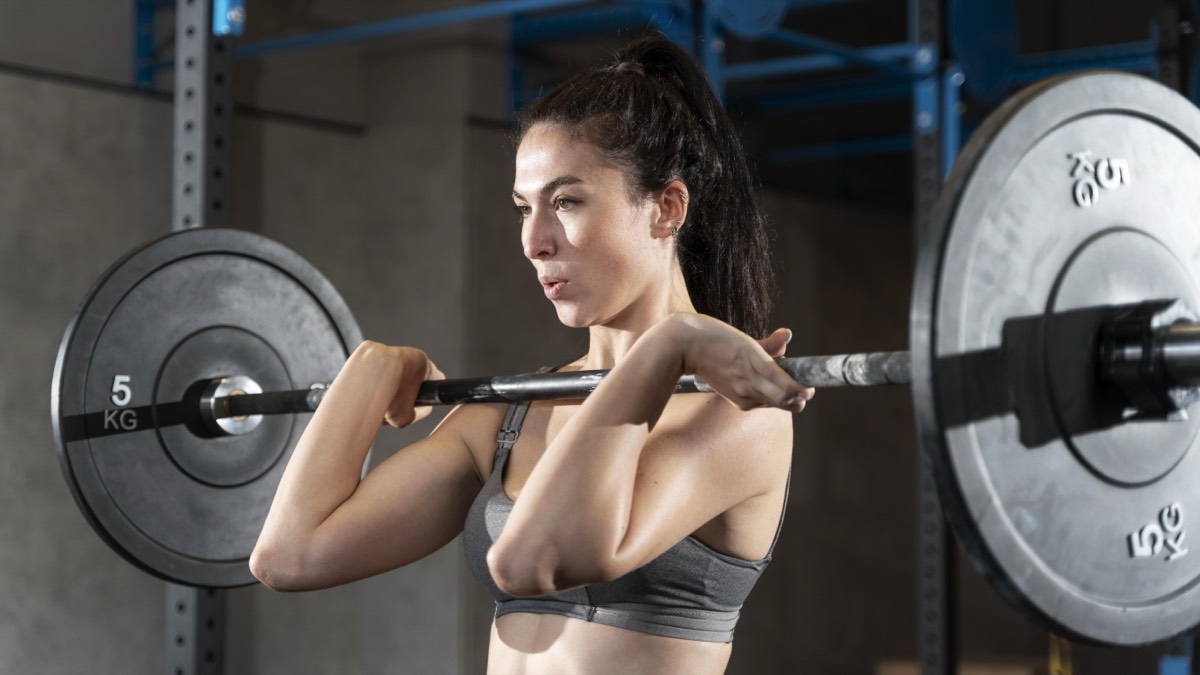
Unlike the bench press, you'll unrack from a front rack position:
- Set the bar at upper chest height in a squat rack
- Walk into the bar with it resting on your front delts and upper chest
- Grip just outside shoulder width
- Stand up and step back
Grip
Slightly wider than shoulder width works for most people. Your forearms should be vertical when viewed from the front. Grip the bar in your palms (not fingers) with wrists stacked over forearms.
Elbow Position
Elbows should be slightly in front of the bar at the start. This creates a better shelf and launch position. Don't flare them way out to the sides.
Stance
Feet shoulder-width apart or slightly narrower. Squeeze your glutes and brace your core hard. Think about standing in a plank position.
The Press
Clear Your Face
This is where it gets technical. The bar starts in front of your face and needs to travel in a straight line up. You have to move your face out of the way.
As you press:
- Push your chin back (make a double chin)
- Press the bar straight up
- Once it clears your face, push your head through and look up at the bar
Bar Path
The bar should travel straight up and slightly back, ending directly over the center of your foot. Don't press the bar forward—that's inefficient and stresses your shoulders.
Lockout
At the top, your arms should be fully extended, elbows locked. The bar should be directly over your midfoot when viewed from the side, with your head through (ears in front of arms).
Maintaining Full Body Tension
Throughout the press:
- Core stays braced
- Glutes stay squeezed
- Quads stay tight
- You're essentially a rigid column of support
Common Overhead Press Errors
Excessive Back Arch
The Fix: Squeeze your glutes harder. This tilts your pelvis and prevents excessive lumbar extension. You want a slight arch, not a standing-backbend.
Pressing Forward Instead of Up
The Fix: Think about driving the bar slightly back as you press. Film yourself from the side—the bar should end over your midfoot.
Elbows Flaring Wide at the Start
The Fix: Keep elbows slightly forward of the bar at the bottom. Think about pointing them 30-45 degrees forward.
Not Getting Your Head Through
The Fix: Once the bar clears your face, push your head through aggressively. Your ears should end in front of your arms at lockout.
Losing Core Tightness
The Fix: Treat every rep as a max attempt for bracing. Take a big breath, brace hard, and don't exhale until lockout.
Push Press vs. Strict Press
Strict Press
No leg drive. All pressing is from upper body strength. The standard overhead press.
Push Press
Slight knee dip and drive to initiate the lift. Allows heavier weights. The leg drive creates momentum, and you press the bar the rest of the way.
Both have value:
- Strict press builds pure pressing strength
- Push press allows overload and develops power
I recommend building a solid strict press foundation before incorporating push press.
Programming Overhead Press
Frequency
1-2 times per week is sufficient for most people. It can be combined with bench pressing in the same program.
Rep Ranges
- Strength (3-6 reps): Main overhead work
- Hypertrophy (8-12 reps): Dumbbell variations, lighter barbell work
- Beginners: 3 sets of 5 reps is a great starting point
Progression
The overhead press progresses slower than other lifts. Adding 5 pounds every week or two is more realistic than rapid jumps. Use microplates (1.25 or 2.5 lb) if available.
Accessory Work
- Dumbbell pressing (unilateral strength)
- Lateral raises (medial deltoid)
- Face pulls (rear delt and rotator cuff)
- Tricep work (lockout strength)
- Core stability work
Overhead Press for Shoulder Health
Balancing Pressing and Pulling
For every pressing movement, you should include pulling movements. If you press overhead twice a week, row or do pulldowns twice a week.
Warming Up
- Arm circles and shoulder dislocates with a band
- Light sets working up to your working weight
- Face pulls to activate rear delts
Listening to Your Shoulders
Some shoulder discomfort with overhead pressing is common, especially if you've neglected it. Persistent or sharp pain is not normal. If something feels wrong, stop and evaluate.
Variations to Include
Z Press
Seated on the floor with legs straight out. Eliminates leg drive and lower back assistance entirely. Extremely humbling.
Landmine Press
Angled pressing with one end of the barbell in a corner or landmine attachment. Great for those who can't press directly overhead.
Arnold Press
Dumbbell press that starts with palms facing you and rotates to palms forward. Good for shoulder health and deltoid development.
Behind the Neck Press
Controversial but effective for some. Requires good shoulder mobility. Use lighter weight and higher reps if you include it.
The Bottom Line
The overhead press is a honest lift. You can't cheat it much, and it exposes weaknesses in your shoulders, core, and pressing strength. It's also one of the most satisfying lifts when you hit new personal records.
Start with the bar if needed. Film yourself to check your bar path. Progress slowly and celebrate small wins. A bodyweight overhead press for reps is an impressive achievement that takes most people years to achieve.
Build your press patiently, and you'll develop the kind of shoulder strength that transfers to everything else you do.
Frequently Asked Questions
How is overhead press different from bench press?
Why is my overhead press so weak compared to bench?
Is overhead pressing bad for your shoulders?
Medical Disclaimer
This content is for informational purposes only. Always consult a healthcare professional before starting any new exercise program.
Related Articles
Put This Knowledge Into Action
Download RoyalFit and get personalized workout plans that incorporate these training principles, tailored to your goals.
Download on App Store